

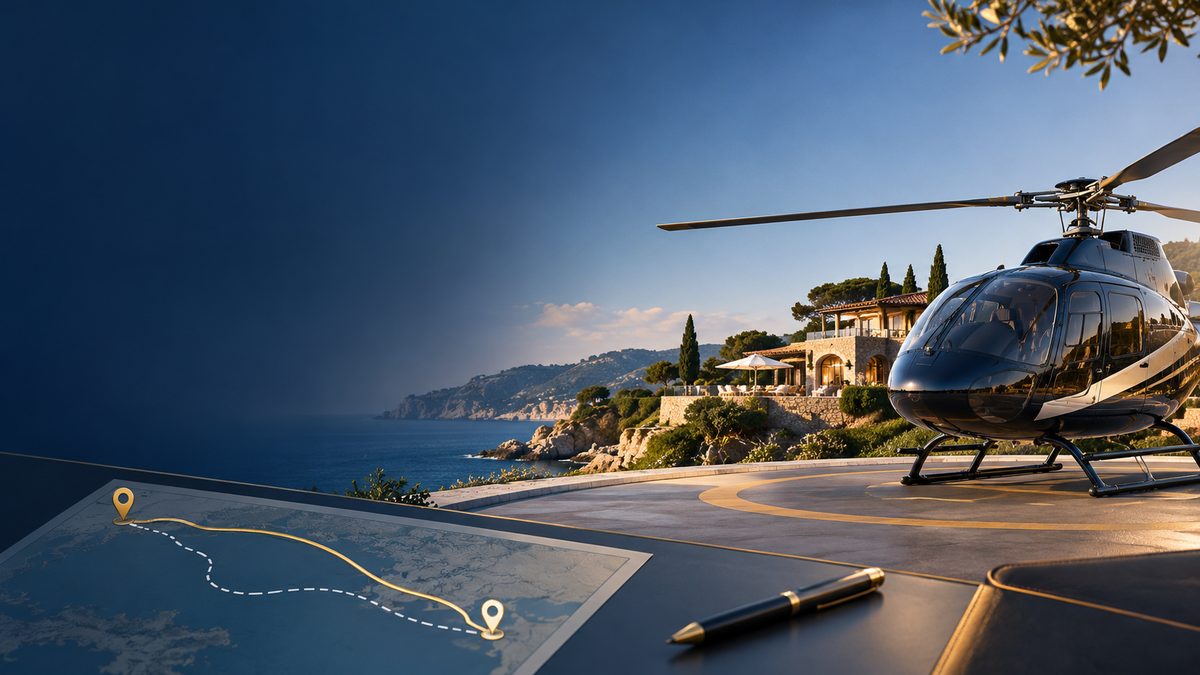
For a resort, a villa, or an event venue, this can represent a service of substantial value, particularly when it streamlines complex transfers.
However, receiving a photograph of a seemingly large lawn is not enough to confirm landing feasibility.
Before proposing such a solution, I consider it essential to verify applicable permissions, site characteristics, surrounding obstacles, and the operational criteria required for approach and departure.
Even seemingly minor details can prove decisive.
The presence of trees, buildings, power lines, unsecured items, or people nearby can affect the site assessment. Furthermore, rotor downwash can blow up dust and debris, requiring specific precautions.
In certain circumstances, assessments may rule out a direct landing, leading to an alternative solution.
This does not necessarily mean foregoing the helicopter transfer. It may be more appropriate to use an authorised helipad nearby and arrange ground transport for the final leg.
The quality of the overall solution proposed makes all the difference.
If a hotel or event organiser wishes to offer this service to their guests, I prefer to be involved before landing is presented as a confirmed option.
Final feasibility clearance naturally rests with the relevant authorities and the operating carrier conducting the flight.
My role as an aviation advisor is to help gather the right information, evaluate alternatives, and coordinate the necessary checks.
For hospitality managers and private property owners, this is precisely where valuable collaboration begins: when an attractive idea must be transformed into a viable service.