

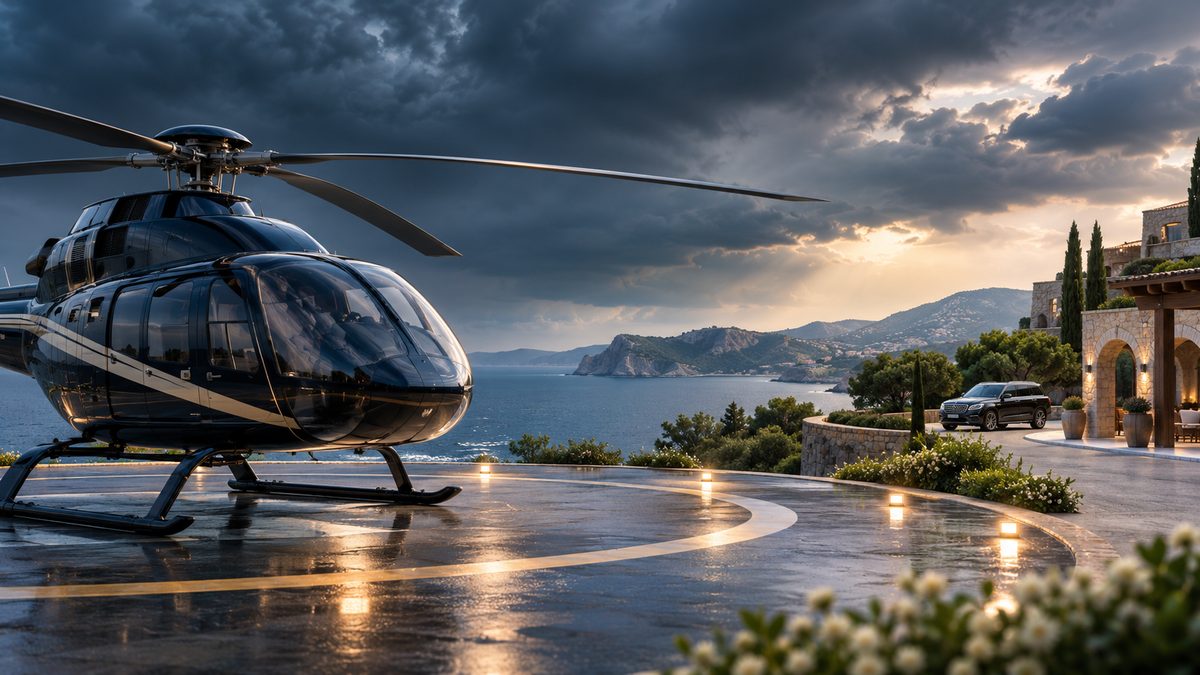
The issue arises when the entire itinerary is built on the assumption that the transfer will proceed precisely as planned.
Weather conditions can impose operational limitations, rerouting, or cancellations. In such circumstances, the final decision regarding flight safety rests solely with the flight crew and operators, and can never be subordinate to a client's diary.
This does not mean that helicopters are an unreliable solution. It simply means that when a transfer forms an essential link in a complex programme, operational risk must be evaluated right from the initial planning stage.
For a client travelling to join a yacht, for example, I would never look at flight time alone. I would examine the exact embarkation point, the availability of a secondary landing site, and which land or sea alternatives are realistically feasible.
An equivalent backup is not always available. Precisely when no alternative exists, the client must be made fully aware before confirming the arrangements.
This approach is particularly critical for concierges, DMCs, and luxury hospitality teams, as any disruption can create a knock-on effect across numerous scheduled services.
A reliable aviation advisor cannot guarantee favourable weather, but they can identify potential bottlenecks, coordinate operational checks with the carrier, and outline workable contingency plans where possible.
Were I organising an event where guest arrivals depend on air transfers, I would want to address these contingencies well before presenting the final proposal to the client.
True excellence in organisation is demonstrated by the foresight that circumstances can always change.